8 October 2026
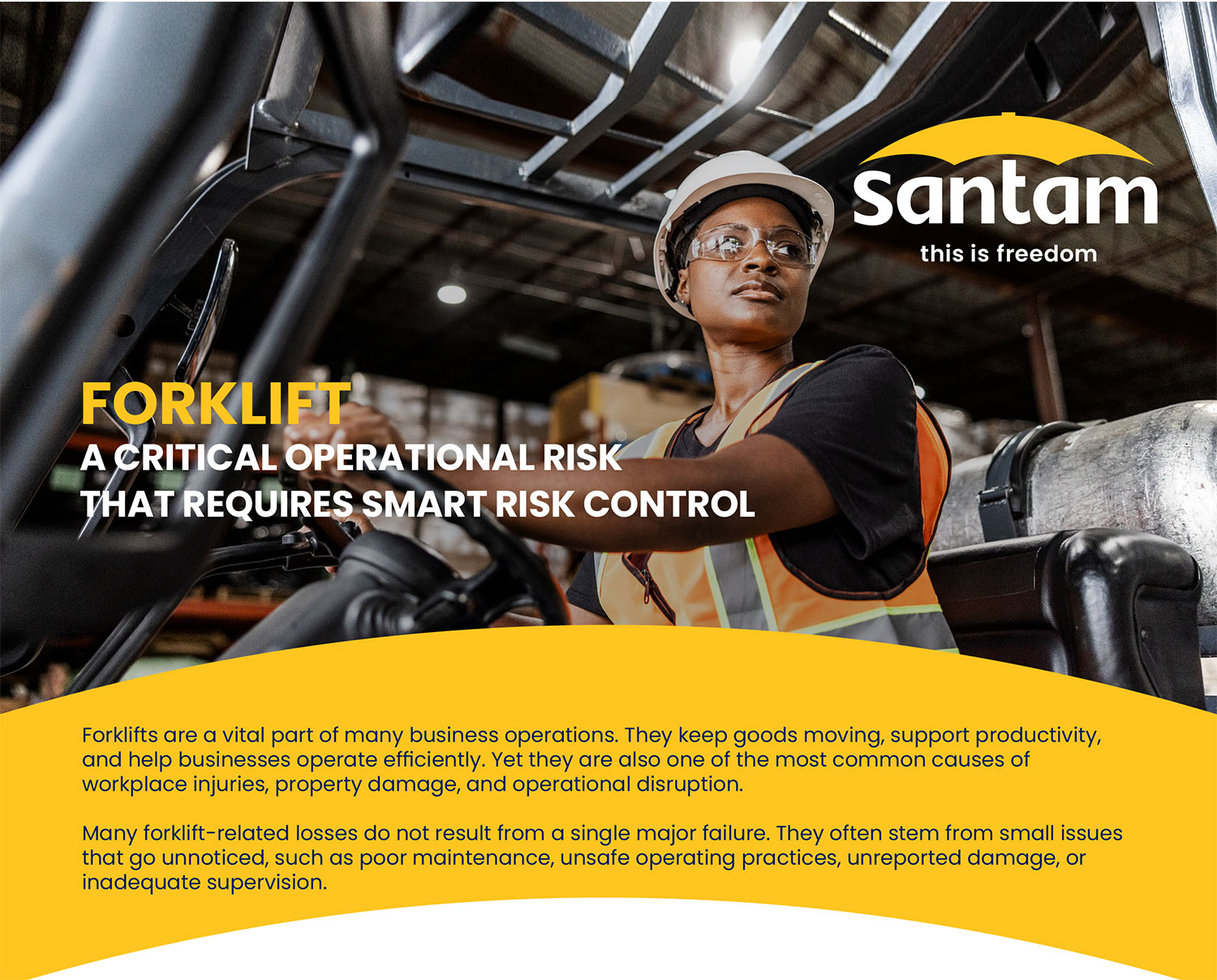
Forklifts are a vital part of many business operations. They keep goods moving, support productivity, and help businesses operate efficiently. Yet they are also one of the most common causes of workplace injuries, property damage, and operational disruption.
Many forklift-related losses do not result from a single major failure. They often stem from small issues that go unnoticed, such as poor maintenance, unsafe operating practices, unreported damage, or inadequate supervision.
The Reality of Forklift Risks
Forklifts operate in dynamic environments where people, stock, equipment, and infrastructure interact continuously.
When something goes wrong, the consequences can be severe. Common loss scenarios include:
- Operator injury or fatality
- Damage to stock, racking, buildings, and equipment
- Vehicle overturning or tip-over incidents
- Fire losses linked to battery charging or electrical faults
- Business interruption following operational incidents
- Third-party liability claims
From an insurance perspective, many of these losses are preventable through effective maintenance, operator training, and operational controls.
Where Problems Commonly Occur
1. EQUIPMENT FAILURE AND TIP-OVER 2. UNSAFE MODIFICATIONS
Poor maintenance, worn components, or mechanical defects can cause forklifts to fail under load.
Additional risk factors include:
- Overloading beyond rated capacity
- Operating on uneven or unsuitable surfaces
- Poorly secured loads
- Unauthorised modifications affecting stability
These incidents often result in serious injury, stock losses, and structural damage.
2. UNSAFE MODIFICATIONS
Changes made without manufacturer approval can significantly alter a forklift’s performance and safety characteristics.
Examples include:
- Speed modifications
- Structural alterations
- Component replacements that affect stability
- Battery conversions that change weight
- distribution
Unauthorised modifications are a common contributor to major losses and claim disputes.
3. BATTERY AND CHARGING HAZARDS
Forklift batteries require careful management.
Potential exposures include:
- Overheating during charging
- Poor ventilation in charging areas
- Damaged or deteriorating batteries
- Charging near combustible materials
- Electrical faults and equipment failure
- Where controls are inadequate, these risks can result in fire, explosion, equipment damage, and operational disruption.
4. OPERATOR RISK
Operator behaviour remains one of the most significant contributors to forklift incidents.
Risk factors include:
- Untrained or unauthorised operators
- Unsafe driving practices
- Excessive speed
- Poor visibility management
- Lack of supervision
A single operational error can result in severe or even fatal consequences.
5. IMPACT AND ACCIDENTAL DAMAGE
Not all forklift incidents result in immediate failure. Repeated minor impacts can cause hidden damage to:
- Racking systems
- Walls and structures
- Loading areas
- Safety barriers
When damage goes unreported, the risk of future collapse or failure increases significantly.
6. DAILY USE AND SITE CONDITIONS
Operational environments play a major role in forklift safety.
Common issues include:
- Defects not reported or repaired
- Damaged forklifts remaining in service
- Poor housekeeping practices
- Congested work areas
- Inadequate traffic management controls
Small operational issues can quickly develop into major incidents.
What Good Risk Control Looks Like
Effective forklift risk management starts with consistent daily practices.
Good risk controls include:
- Conducting daily pre-use inspections
- Removing defective forklifts from service immediately
- Allowing only trained and authorised operators to operate equipment
- Always following manufacturer operating limits
- Prohibiting unauthorised modifications
- Reporting all damage, incidents, and defects promptly
- Maintaining clear traffic routes and work areas
- Implementing routine maintenance programmes
Simple decisions and consistent controls can make a significant difference to loss outcomes.
Why This Matters for Insurance
From an insurance perspective, how forklift risks are managed directly impacts:
- Claim outcomes
- Policy terms and conditions
- The ability to demonstrate reasonable care
Failure to maintain safe practices can result in claims being reduced, delayed, or declined.
A structured, proactive approach helps protect your:
- People
- Assets
- Operations
- Insurance cover
The good news is that many forklift-related losses can be prevented through simple, consistent risk management practices. The checks below can help reduce exposure, improve safety, and support better insurance outcomes.
QUICK DAILY FORKLIFT CHECK
Before use, confirm:
- Tyres are in good condition
- No visible fluid leaks
- Forks and mast are undamaged
- Brakes, horn, and lights are functioning
- No warning indicators are active
- All defects are reported immediately
THE BENEFITS OF GETTING THIS RIGHT
A disciplined approach to forklift risk helps you:
- Reduce accidents and injuries
- Protect employees and contractors
- Avoid costly damage to property and stock
- Maintain operational continuity
- Strengthen claim outcomes
- Improve overall site control and safety
Your Broker: A Partner in Risk
Your broker plays a critical role in helping you identify, understand, and manage forklift-related risks before they lead to incidents or claims.
By helping you recognise exposures early and implement appropriate controls, your broker supports safer operations, stronger risk management, and greater business resilience.
The goal is not to limit productivity, but to help your business operate safely, remain
resilient, and reduce exposure to avoidable losses.
Together with your broker, you can stay protected today and as your business continues to grow and evolve.
Contact your ZIB Broker
Source: www.santam.co.za